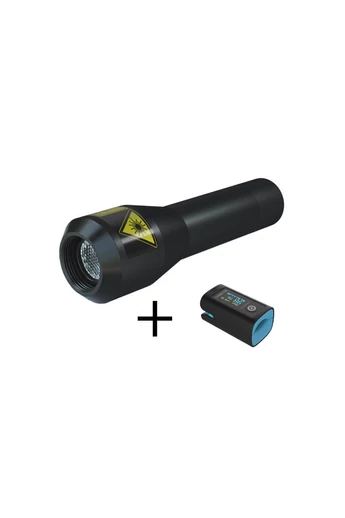
Safe Laser 1800 Vs Safe Laser 500 10 Comparisons
Safe Lasers are cold therapeutic lasers of Class IV, often referred to as photobiomodulation systems (PBM). They are developed to lessen the pain, ease inflammation and enhance tissue healing by emitting specific wavelengths of light which interact with mitochondria in the cell. Although the fundamental principle behind each model is the same, the differences in design and power are what make the different models unique. The Safe Laser 1800 represents the most powerful model with the highest power and the Safe Laser 500 is a robust, portable and more affordable unit. Knowing their primary features will allow practitioners to select the appropriate tool to satisfy their clinical needs.
1. Laser Power and Dosage Time
Safe Laser 1800 is the most powerful Safe Laser in its arsenal. It boasts a peak output of 18 Watts (18,000 mW). The power of this is the most distinctive feature. Its high wattage permits a therapeutic amount of light to be given in a short duration. With the SL 1800, procedures that could have taken a long time on a lesser-powered device will be completed in seconds. This is essential for clinical efficiency and allows practitioners to tackle large areas or complicated ones swiftly.
Safe Laser 500 : Safe Laser 500 is a laser with a peak power of 5 Watts (5,0 milliwatts). This is less than 1800, but it is considered to be a powerful laser in the larger therapeutic laser market. It delivers a large dose of energy, but it takes an extended time to apply the same amount per spot or area. This makes it a efficient device, however it is not as efficient for longer treatments.
2. Wavelength and depth of penetration
The wavelength of 810 nm is used in both models. This infrared wave length was chosen due to its superior tissue penetration. It is capable of piercing deeply into muscles, joints and bones. It is effective in treating conditions ranging from superficial tendonitis, to joint arthritis that is deep. Safe Laser uses a single wavelength that is extremely effective for treating deep tissues, which is not the case with other systems. It ensures that there is a consistent treatment between the 1500 and 1800 model.
3. Beam Configuration, Treatment Applicators and Other Features
Safe Laser 1800 features a single large-diameter head. The beam of the head is divergent. This means it extends and covers a greater surface area, several centimeters in width, right near the point of contact. It is ideal to treat huge muscles or large areas of swelling or when an overall tissue effect is required over the entire field. It permits a more precise, point-by-point treatment to large areas.
Safe Laser 500 – This model comes with a clustering application. It is equipped with the laser diode that has 810nm wavelength similar to those that were used in 1800, however it is surrounded by SLDs that emit red light that is visible at 660nm. The wavelength 660nm is absorbed more deeply, which makes it ideal for treating skin conditions and other superficial tissues. The 500's method is more of a "combined" treatment, focusing on multiple depths of tissue simultaneously through its cluster head.
4. Calculation of Energy Dosage and Delivery
Security Laser 1800. Due to the high power of the 1800, it provides energy in Joules/second at a rapid rate. Treatment time should be the primary concern. The device's computer software calculates the time needed for exposure in accordance with the dose desired. The effectiveness of the device lies in the speed at which it operates. It is able to offer an extremely high dose treatment plan within a clinically viable timeframe.
The laser 500 is safe. Laser 500: Energy delivery is slow. The device is often equipped with a built-in feature for dosimetry. A contact sensor is typically found in a variety of models. When it is placed on the skin, it calculates automatically how long the procedure will take, based on power settings and the type of condition being treated. This is a helpful guide for laser therapy practitioners who are beginning their journey.
5. Design design, portability, and the intended usage
Safe Laser 1800 The device is a console-style. It's a heavier and larger machine that is intended to be an all-purpose device for stationary use in clinical settings, like the sports medical clinic, vet hospital, or the physiotherapy office. Its design prioritizes power and durability to ensure high-frequency usage over the portability.
Safe Laser 500: The 500's versatility is a hallmark of the. It's a small handheld device that is about the size of a large electric shaver. It is portable and lightweight, which makes it perfect for mobile therapists or athletes who travel for competitions. It is also utilized in clinics where the device must be moved from one room of treatment to another.
6. Clinical Applications, Treatment Scope
Secure Laser 1800's high power allows it to treat chronic and deep-seated ailments. It is especially effective in treating major joint problems (hip, knee, spine), severe muscle trauma as well as patients with high BMI. This is the ideal method for cases with high volumes which are difficult to treat.
Safe Laser 500: While effective for a wide array of conditions, its strength lies in treating localized, acute, and superficial-to-mid-depth issues. It is great for tendinitis and bursitis. It can also be used on sprains, trigger points wound healing, and strains. It is especially effective for treating skin cuts, soft tissue traumas, as well as scar tissue.
7. Treatment Protocols and Versatility
Both models operate by utilizing the principle of photobiomodulation and are able to be used to similar medical conditions, including joint pain and musculoskeletal discomfort inflammation, pain, and healing. The difference lies not in the "what" but in the "how rapid" as well as "how deep." The 1800 is a speedy device for tissues that are deep, whereas the 500 is a flexible combination of wavelengths and guided dosing in a portable size.
8. Workflows for Efficiency and Practice
Safe Laser 180: This laser offers unbeatable efficiency in a medical practice. The treatment of a patient can be done in just 5-10 minutes, instead of the standard 15-20. This increases patient throughput. This can lead to improved practice economics and the possibility to treat more complicated cases within a regular appointment slot.
Safe Laser 500 offers a more organized procedure. The treatment process is more time-consuming, which may limit the number of patients that can be treated in a day. Automation and portability can speed up the procedure for solo practitioners or people working in less hectic environments.
9. Analysis of the investment and cost-benefit analysis
Safe Laser 1800: It is an elite model that is priced at an increased price. Its capacity for clinical use, its ability to deal with the most difficult cases, and its position as a primary revenue-generating tool in a well-established clinic prove its ROI.
Safe Laser 500: It is an easier entry point to the high-powered laser therapy. Its price is lower, which can be attractive for aspiring practitioners or mobile service providers or clinics with an 1800 device for localized, specific treatments.
10. Summary: How to Choose between the Models
Safe Lasers 1800 and 500 are identical in the sense that both of them have a laser beam.
Choose the Safe Laser 1800 if you have a large practice and treat a large number of patients suffering from deep spinal or joint disorders or work with animals high-performance athletes and your practice is able to handle a large number of patients.
Choose the Safe Laser 500 if: You are a mobile therapist and require a portable device that can treat a greater proportion of superficial injuries, acute conditions, and wounds, or need a more economical entry into the Safe Laser system without sacrificing the effectiveness of your therapy.
Both are highly effective tools that are based on the same science however they are adapted to different operational or clinical scenarios. Have a look at the best BEMER for website advice including lézerterápia hatása, lézeres kezelés székesfehérvár, safe laser debrecen, safe laser kölcsönzés, lágylézer árak, safe laser 1800, lagy lezer, lezer terapia, lézerterápia otthon, lagy lezer and more.

Top 10 Possible Contraindications Or Side Effects Associated With The Use Of Safe Laser Devices
The non-invasiveness and safety of Safe Laser devices is widely known However, they also serve as powerful instruments for healing that work on behalf of the body. Like any medical procedure, a thorough understanding of potential contraindications as well as adverse effects is essential to ensuring patient safety and the effectiveness of treatment. Contraindications are situations in which the use of a product should be avoided due to the potential for harm. Side effects are unwanted reactions, but they are not always detrimental. A professional who is responsible must be aware of the difference between absolute bans and situations that require caution, and physiological responses. The information gained from this course is vital to a successful and ethical approach to photobiomodulation.
1. Absolute Contraindication cancer and active malignancy
The main contraindication to laser treatment is the direct application energy to a metastasis, or cancerous tumor. The primary concern for researchers is whether the photobiomodulation (which increases cell metabolism, proliferation and blood flow) could speed up or accelerate the proliferation of cancerous cells. This is a total ban. It's not permitted.
2. Direct application to Thyroid Gland: Absolute contraindication
The thyroid gland is extremely metabolically active, and responds to many stimuli. It is not recommended to place laser energy directly on the cartilage of the thyroid within the neck. Laser light can alter the production of thyroid hormones or worsen thyroid-related conditions like Graves disease or thyroiditis. The effects on the body aren't as severe in the treatment of different body organs, but targeted energy is not recommended.
3. Absolute Contraindications: The Abdomen during Pregnancy
Applying the safe Laser directly onto the uterus during pregnancy is a risk. The light isn't harmful, but the precautionary rules suggest that any non-essential application of energy must be avoided. This is a non-negotiable security precaution during the entire trimester of pregnancy.
4. Ocular Safety and the Risk of Retinal Damage
It is the danger that is most likely be triggered when the device is not properly used. The wavelength of 810 nm emitted by Safe Laser devices is invisible and is able to be focused by the lens of the eye onto the retina and cause photochemical or thermal damage before a person is even aware of it. Exposure to reflective surfaces or direct exposure should be avoided. Laser safety glasses that are wavelength-specific for both the operator and patient is the most effective way to avoid this harmful side consequence.
5. Relative contraindication: Photosensitizing medications
Photosensitivity may occur in patients taking certain medications. Drugs such as certain antibiotics (e.g., tetracyclines), diuretics (e.g., hydrochlorothiazide), and some antipsychotics can cause this reaction. Although the risk is reduced in the absence of UV lights, they are still considered a relative contraindication. A thorough patient medication review is necessary as is the use of a patch test or treatment at lower dosages may be recommended prior to starting complete treatment.
6. The "Healing Crisis" or "Crisis of Repair"
A potential side effect that is often not understood is an increase of symptoms following the initial treatment. This is called a "healing crisis" and not a sign of damage, but rather an immediate activation of your body's repair and inflammation processes. As the circulation increases, and cellular debris begins to be eliminated, a few patients will experience an increase in swelling, pain or stiffness. This typically resolves within 24-48 hours. By educating your patients, you will avoid stress and the need to stop treatment.
7. Hemorrhage or Coagulation Disorders as well as Relative Contraindications
Because of the vasodilatory effect of PBM (caused by the release of the nitric oxide) and the use of the laser directly on an area of active hemorrhage or an extensive, acute hematoma is not advised, as it could theoretically increase bleeding in the initial stages. Patients with severe bleeding disorders like hemophilia or those taking high doses anticoagulants must be treated with care and only after consultation with their doctor.
8. The absence of sensitivity and the risk of over-treatment. Risk
Safe Laser therapy comes with a unique feature that is the absence of thermal sensations during application. The most commonly reported side effect is "no feeling." This could be a risky scenario. Someone who doesn't have the proper education or dose adherence could believe that the device isn't functioning, and therefore over-treat a particular part. The biphasic reaction can cause a reduction in therapeutic effect.
9. Precautions based on specific patient populations
Certain populations require special consideration. Children and adolescents are among the most vulnerable. direct exposure to epiphyseal (growth) plates found in long bones should be avoided due to the uncertain effects of intense light on bone growth. While the non-thermal characteristics of the laser offer a lower level of danger to patients who have pacemakers and other electronic implants, it is advised that they refrain from direct contact with the device generator. This will keep interference from electromagnetic sources.
10. Skin Reactions and Endogenous Photosensitivity
Genuine adverse reactions to the skin are uncommon. A transient redness, or the erythema can be felt by some individuals due to increased blood flow. But this is not a negative side effect. An actual allergic reaction to the radiation itself is not possible. As with photosensitizing agents, certain conditions, like lupus and porphyria can increase the sensitivity to light. To determine the cause of these conditions, it is necessary to obtain the complete medical history of the patient. Take a look at the most popular BEMER bérlés for more advice including www safelaser hu, lézeres izületi kezelés, lágylézer terápia, safe laser 500 bérlés, lézerterápia vélemények, safe laser készülék, lágylézer készülék bérlés, safe laser 150, lágylézer készülékek, lágylézer készülékek and more.